
GDPR Compliant IT Disposal for Business
- Alasdair Gemmell
- Jul 14
- 5 min read
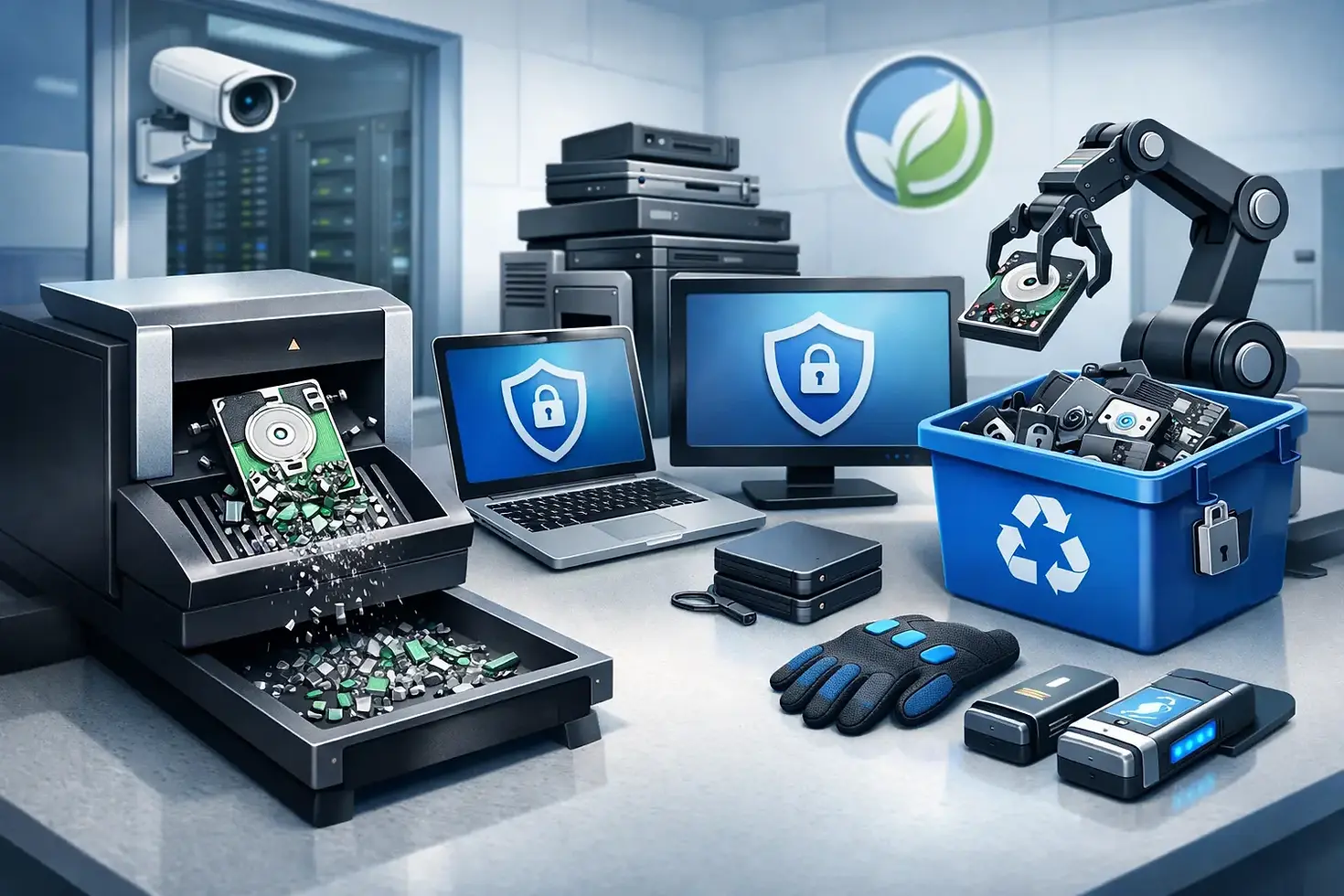
A redundant laptop is not harmless simply because it no longer powers an employee’s work. It may still hold customer records, staff files, passwords, email archives, browser data or access credentials. GDPR compliant IT disposal is therefore a controlled business process, not a trip to the nearest recycling point.
For organisations retiring equipment in London and across the South East, the objective is straightforward: remove assets efficiently, prevent unauthorised access to personal data, meet environmental obligations and retain evidence that the job was completed properly. The difficulty lies in maintaining that control from the moment equipment leaves site through to data destruction, reuse or recycling.
What GDPR compliant IT disposal means in practice
The UK GDPR does not provide a single approved disposal method or a certificate that makes a company automatically compliant. Instead, it requires organisations to protect personal data with appropriate technical and organisational measures throughout its lifecycle, including when devices are no longer required.
If a computer, server, mobile phone, storage array, printer or removable drive contains personal data, the organisation that collected that data remains accountable for how it is handled. Passing equipment to a recycler does not pass away that responsibility. A disposal provider should act under clear instructions, use secure procedures and provide records that allow the organisation to demonstrate due diligence.
In practical terms, a compliant process usually includes a documented asset handover, secure transport, a verified method of erasure or destruction, and formal reporting. The right approach depends on the asset, the type of data involved, whether the device is operational, and whether there is realistic reuse value.
The risks hidden in old IT equipment
The obvious risk is a data breach. A discarded hard drive can contain far more than documents. Cached credentials, archived emails, scanned identification, financial information and customer databases may remain recoverable even after files have been deleted or a device has been reset.
There are also operational and legal risks. Lost assets can create uncertainty during an audit or data subject request. Poor disposal controls may make it difficult to evidence compliance to senior leadership, customers, insurers or regulators. For public sector bodies, schools, universities and organisations handling sensitive information, the reputational consequences can be significant.
Environmental compliance matters too. Waste electrical and electronic equipment must be handled through appropriate WEEE recycling routes. IT equipment should not be placed in general waste or handed to an unverified collector simply because collection is convenient. Batteries, circuit boards, screens and other components require responsible treatment, while reusable equipment should be considered for refurbishment before recycling.
Build a controlled disposal process
A strong IT disposal programme starts before collection day. Identify which assets are leaving the business, where they are located and whether they contain data-bearing media. This includes desktop and laptop drives, servers, USB devices, network storage, backup tapes, smartphones, tablets, printers with internal storage and multifunction devices.
Keep an asset record and chain of custody
An asset list should capture enough detail to reconcile what leaves the premises with what is processed. Serial numbers, asset tags, device type, quantity and location are useful. For higher-risk estates, record the data-bearing components separately, particularly where drives can be removed from servers or storage equipment.
At collection, equipment should be counted and transferred under a documented chain of custody. Secure containers, tamper-evident handling where appropriate and unmarked vehicles can reduce unnecessary exposure. The key question is simple: can you account for each asset from your office, school, data centre or storeroom to its final outcome?
Choose wiping, destruction or a combination
Working devices with residual value can often be securely wiped and prepared for reuse. This is commercially and environmentally sensible when the erasure method is appropriate for the media type and can be verified. Refurbishment extends the useful life of equipment and may create a rebate against collection or processing costs for newer, marketable assets.
However, wiping is not always the right choice. Failed drives, damaged devices, obsolete media and assets containing highly sensitive information may require physical destruction. Shredding or other approved destruction methods can provide greater certainty where software erasure cannot be completed or verified.
A credible provider should be able to explain which method is being used, why it is suitable, and what evidence will be supplied. Be cautious of vague claims that devices are simply “cleared” or “recycled”. Data destruction and WEEE recycling are related stages, but they are not the same service.
Retain meaningful certificates and reports
A certificate is valuable only when it is specific enough to support your records. Depending on the service, documentation may include a collection note, asset report, data destruction certificate, serial-number report, wiping verification and recycling or disposal confirmation.
These records help demonstrate accountability under UK data protection law and make internal governance easier. They also allow IT, facilities and compliance teams to close asset registers accurately. Agree reporting requirements before the collection, especially where procurement policies, client contracts or information security frameworks impose particular evidence standards.
Questions to ask an IT disposal provider
Price matters, but the cheapest collection can become expensive if it leaves gaps in security or documentation. Before appointing a provider, establish whether it handles collection, transport, data destruction, testing, refurbishment and final recycling itself or through subcontractors. Subcontracting is not automatically a problem, but it should be transparent and controlled.
Ask how the provider records custody, protects equipment in transit and separates data-bearing assets from general electrical waste. Confirm whether data wiping is verified, what happens when a wipe fails, and whether physical destruction can be arranged on site or off site. You should also understand how reusable equipment is assessed and how non-reusable material enters compliant WEEE recycling channels.
For many organisations, logistics are decisive. A provider that can collect directly from multiple offices, schools or satellite sites reduces the temptation to store redundant equipment for months in unsecured cupboards. Bioteknik supports organisations across London, Kent and Canterbury, Essex and East London, Reading and the Thames Valley, Cambridge and surrounding areas, and Sussex, with wider UK collection arrangements for larger volumes.
Reuse is compatible with data security
There is a persistent misconception that the safest outcome is to destroy every device. Physical destruction has an essential role, particularly for failed media and sensitive assets, but it is not automatically the most responsible option for all equipment.
Once data has been securely and verifiably removed, suitable devices can be tested, refurbished and remarketed. This reduces electronic waste, recovers value from usable hardware and can help fund low-cost or qualifying free collections. Refurbished equipment may also support charitable and community use, provided the same standards of data erasure, testing and quality control are applied.
The trade-off is that reuse requires more process discipline than bulk recycling. Devices need assessment, records, secure wiping and quality checks. For organisations with modern laptops, desktops, servers or networking equipment, that additional effort can be worthwhile. For old, faulty or unsupported hardware, compliant material recovery may be the better route.
Avoid the common disposal mistakes
The most frequent failure is treating deletion as erasure. Emptying a recycle bin, removing a user profile or restoring factory settings may not make data unrecoverable. Another is overlooking devices beyond laptops and desktops, such as printers, phones, backup media and removable drives.
Storage is another weak point. Redundant IT often accumulates while teams wait for a large enough collection. During that period, assets may be accessible to visitors, contractors or staff without a business need. Establishing regular disposal collections and a secure holding area limits that exposure.
Finally, do not separate environmental disposal from information security. A provider must be able to address both. The right outcome is a traceable route in which data is dealt with securely first, then equipment is reused where appropriate or processed through compliant recycling.
When your next refresh, office move or clear-out is planned, treat the collection date as a compliance milestone rather than an administrative task. A clear asset list, secure handover and usable certificate trail will protect your organisation long after the old equipment has left the building.


Comments